 Ananda Family
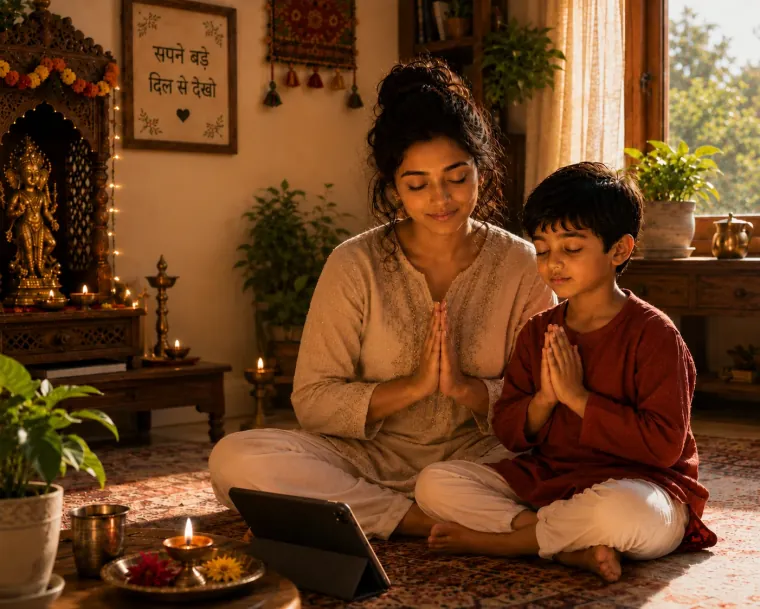
Our grandparents did not call these practices. They were simply how the day went. From waking up to eating to lighting the evening diya, each moment had a short prayer. Here are eight we are slowly forgetting, with the real verse and its meaning.
1. Look at your palms when you wake up
कराग्रे वसते लक्ष्मीः करमध्ये सरस्वति करमूले तु गोविन्दः प्रभाते करदर्शनम्. In English letters: karāgre vasate lakṣmiḥ karamadhye sarasvati, karamūle tu govindaḥ prabhāte karadarśanam.1
Meaning: Lakshmi lives at the fingertips. Saraswati lives in the middle of the palm. Govind lives at the base. So look at your hands in the morning.1
Why it matters today: your first look of the day is at your own two hands, the tools of honest work. Not at a phone.
2. Ask the earth to forgive you before you step on her
समुद्रवसने देवि पर्वतस्तनमण्डले विष्णुपत्नि नमस्तुभ्यं पादस्पर्शं क्षमस्वमे. In English letters: samudravasane devi parvatastanamaṇḍale, viṣṇupatni namastubhyaṃ pādasparśaṃ kṣamasvame.2
Meaning: O Devi, dressed in oceans, with mountains as your body, wife of Vishnu, I bow to you. Please forgive me for touching you with my feet. It is said on waking, before the feet touch the ground.2
3. Pause at dawn, noon and dusk
The word sandhya means twilight, the meeting of night and day. Sandhyavandanam is a daily prayer at morning, noon and evening. It is built around the Gayatri mantra, Rigveda 3.62.10.3
Traditionally it was the duty of those who had their janeu ceremony. Even a short pause at these three times, with one prayer, keeps the spirit of it alive.3
4. Offer your food before you eat
ब्रह्मार्पणं ब्रह्म हविर्ब्रह्माग्नौ ब्रह्मणा हुतम् ब्रह्मैव तेन गन्तव्यं ब्रह्मकर्मसमाधिना. This is Bhagavad Gita 4.24, often said before meals.4
Its simple meaning: the offering, the food, the fire and the one who offers are all Brahman. One who sees Brahman in every action reaches Brahman.4
Why it matters today: one line before eating turns a quick meal into prasad and a moment of thanks.
5. Five small duties every home once kept
The old texts describe five daily great yajnas for every householder. They need no priest. They are offerings to the devas, to the Veda, to the ancestors, to fellow humans and to the bhutas.5
This idea goes back to the Shatapatha Brahmana and the Manusmriti. In many homes it lives on in small ways. A prayer and a page of scripture. Water for the ancestors. Food for a guest, and grain for birds or a cow.
Why it matters today: these five remind us that we owe something to everyone who keeps us alive.
6. Treat a guest like a devta
मातृदेवो भव । पितृदेवो भव । आचार्यदेवो भव । अतिथिदेवो भव । These lines are from the Taittiriya Upanishad, 1.11.2.6
In English letters: mātṛdevo bhava, pitṛdevo bhava, ācāryadevo bhava, atithidevo bhava. Meaning: let your mother be like a devta to you. Let your father, your teacher and your guest be the same.6
7. Touch your elders' feet, and know what the verse really says
अभिवादनशीलस्य नित्यं वृद्धोपसेविनः चत्वारि तस्य वर्धन्ते आयुर्धर्मो यशो बलम. This is Manusmriti 2.121.7
Meaning: for one who greets elders with respect and serves them, four things grow. They are long life, dharma, good name and strength.7
Many people quote this verse with vidya, learning, in place of dharma. The text given here says dharma. Respect for elders grows our goodness, not only our marks.7
8. Light the diya at dusk and say one line
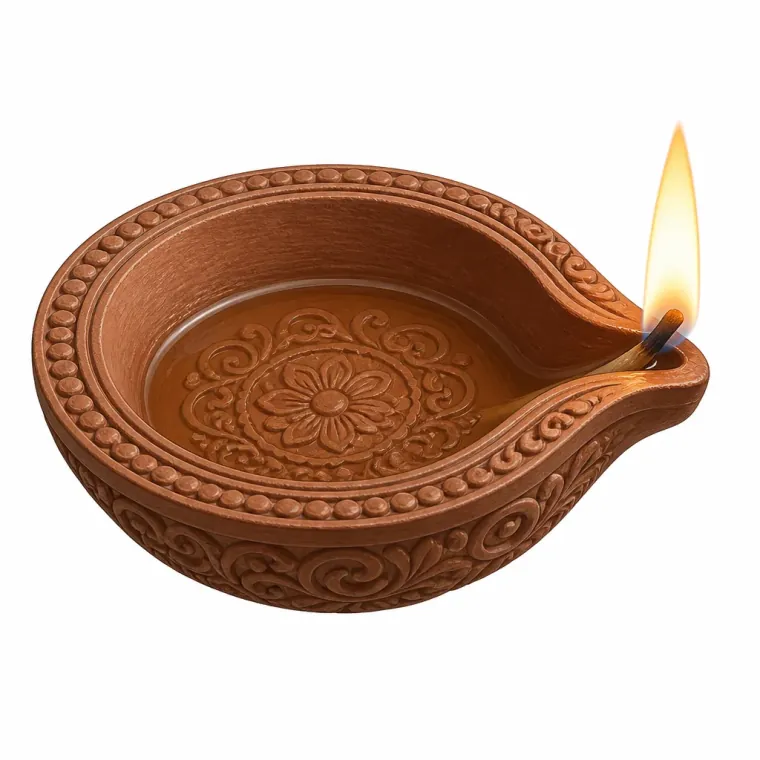
शुभं करोति कल्याणमारोग्यं धनसंपदा शत्रुबुद्धिविनाशाय दीपज्योतिर्नमोऽस्तुते. In English letters: śubhaṃ karoti kalyāṇamārogyaṃ dhanasaṃpadā, śatrubuddhivināśāya dīpajyotirnamo'stute.8
Meaning: I bow to the light of the lamp. It brings good things, health and wealth, and removes the enemy of good thinking, which is ignorance.8
Why it matters today: when the whole family gathers for one minute at dusk, the home itself becomes a mandir.
🙋 Questions families ask
What should we say first thing in the morning?
Many families say Karagre Vasate Lakshmi while looking at their palms.
Which prayer is said before eating?
Many say Brahmarpanam, Bhagavad Gita 4.24.
Do children need to know Sanskrit for these?
No. Start with the meaning in your own language, then add the Sanskrit slowly.
Keep our roots alive at home
Ananda Family helps you explore Hindu stories, festivals and samskaras, with a daily mantra and an evening story practice for your family.