 Ananda Family
School taught us the big names and dates. But the freedom struggle is full of smaller stories that stay with you. Here are ten true ones, from Tamil Nadu to Nagaland, each with its source. Read one tonight and tell it at dinner.
1. Udham Singh chose a name that joined three faiths
In March 1940, Udham Singh shot Michael O'Dwyer at Caxton Hall in London. It was done in revenge for the Jallianwala Bagh killings in Amritsar in 1919.1
In custody, he gave his name as Ram Mohammad Singh Azad. Ram, Mohammad and Singh stood for Hindus, Muslims and Sikhs. Azad means free. He was hanged in London on 31 July 1940. In 1974 his remains came home and were cremated in Sunam, Punjab.1
Why it matters today: even at the end, he wanted India remembered as one people.
2. A Tamil queen beat the British 77 years before 1857
In 1772, the British attacked Sivaganga and killed King Muthu Vaduganatha Thevar. His queen, Velu Nachiyar, escaped. She hid for eight years near Dindigul and planned her return. With help from Hyder Ali of Mysore, she won back her kingdom in 1780.3
The story told in Tamil Nadu says her commander Kuyili set herself on fire and ran into the British ammunition store. Velu Nachiyar also spoke Urdu, English and French. The Sivaganga district calls her the first queen to fight for freedom from the British. She died on 25 December 1796.34
Why it matters today: our fight for freedom did not start in 1857.
3. The first Indian flag abroad was raised by a woman in Germany
On 22 August 1907, Bhikaiji Cama stood up at a meeting of socialists in Stuttgart, Germany. She unfurled what she called the Flag of Indian Independence. It had green, yellow and red bands, with Vande Mataram written in Devanagari.2
That flag was later smuggled into India. Today it is kept at the Maratha and Kesari Library in Pune. Madam Cama lived in exile in Europe for decades. She came home to Bombay in November 1935 and died nine months later, aged 74.2
Why it matters today: the tricolour has a long family history, and a woman carried an early version to the world.
4. Bhagat Singh's jail notebook still survives
We remember Bhagat Singh for his courage. Fewer people know how much he read. In Lahore jail he filled a notebook with notes and lines from the books he was reading.5
He wrote four other books in jail. They were smuggled out but later destroyed. Only the notebook survived. A copy is kept in the National Archives of India, and it is printed as a book today.5
Why it matters today: he was not only brave. He was a thinker who kept learning until the end.
5. A 22-year-old girl ran a secret radio station
When the Quit India Movement began in August 1942, Usha Mehta was 22. She and her friends started a hidden radio station in Bombay. Its first words were: "This is the Congress Radio calling on 42.34 metres, from somewhere in India".6
The team kept moving the transmitter so the police could not find it. On 12 November 1942, police raided the studio while Vande Mataram was being played. Usha Mehta went to jail and was freed from Yerawada Jail in March 1946.6
Why it matters today: young people found clever ways to keep India's voice alive.
6. Rani Gaidinliu was caught at 17 and freed after 14 years
Gaidinliu joined the Heraka movement of Haipou Jadonang in 1927, when she was only 13. The British captured her on 17 October 1932. She was 17.8
She spent 14 years in jail. In 1937 Jawaharlal Nehru met her in Shillong Jail and promised to free her. He gave her the title Rani. She was released in 1947, after independence, and received the Padma Bhushan in 1982.8
Why it matters today: the hills of the Northeast gave India some of its bravest daughters.
7. A grandmother of about 72 died holding the tricolour
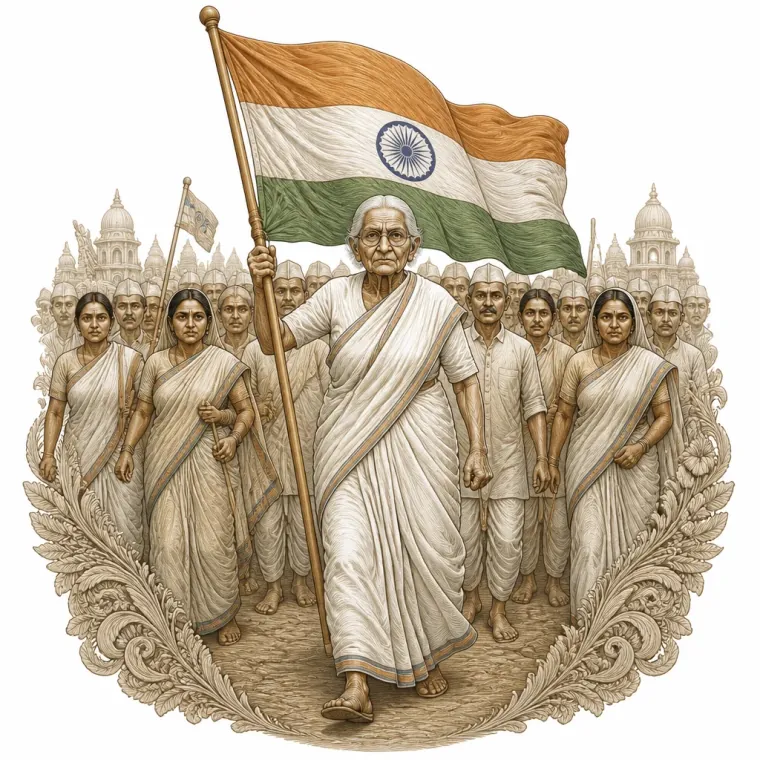
Matangini Hazra was born in 1870 near Tamluk in Bengal. People lovingly called her Gandhi Buri, which means old lady Gandhi.7
On 29 September 1942, she led volunteers to take over the Tamluk police station. She was about 72. Police shot her in front of the station. She died with the tricolour still held high. In 1977 her statue became the first statue of a woman put up in Kolkata after independence.7
Why it matters today: no one is too old to stand up for what is right.
8. Birsa Munda led a rebellion and died at just 25
Birsa Munda was born on 15 November 1875 and died on 9 June 1900. In only 25 years, he led his people against British rule. His followers called him Bhagwan and Dharti Aaba, which means Father of the Earth.9
His rebellion, the Ulgulan, lasted until his death. Today his birthday, 15 November, is marked across India as Janjatiya Gaurav Divas, or Tribal Pride Day.9
Why it matters today: India's forest communities fought for their land long before most of the country rose.
9. Netaji gave two islands their names in 1943, and India kept his word in 2018
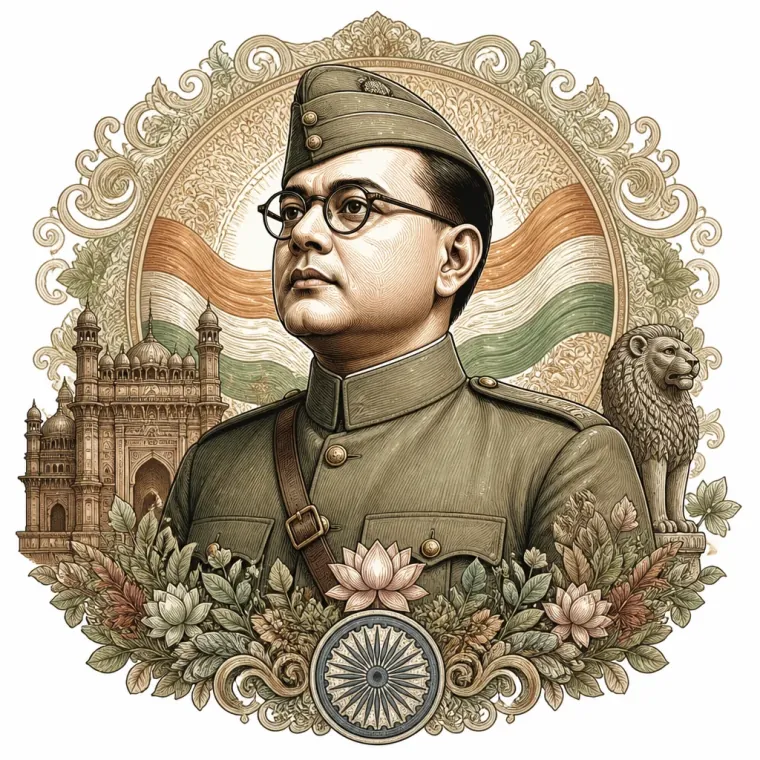
During the Second World War, Japan captured the Andaman and Nicobar Islands. Netaji's Azad Hind Fauj fought alongside Japan. On 30 December 1943, Netaji hoisted the tricolour in Port Blair. He suggested new names for the islands: Shaheed and Swaraj.10
Seventy-five years later, on 30 December 2018, Neil Island was renamed Shaheed Dweep and Havelock Island became Swaraj Dweep. Ross Island became Netaji Subhas Chandra Bose Dweep.10
Why it matters today: if you visit these islands, the names carry Netaji's dream.
10. His ashes waited 73 years to come home to a free India
Shyamji Krishna Varma started India House in London, a hostel and meeting place for Indian students. He also ran a journal, The Indian Sociologist, to stir young Indians against British rule.11
He died in Geneva on 30 March 1930. His wish was simple: bring my ashes back only to a free India. That wish came true in August 2003, when his ashes reached Gujarat. In 2010 a memorial, Kranti Teerth, opened near his birthplace Mandvi.11
Why it matters today: some of our heroes never saw free India, but they believed in it until their last breath.
🙋 Questions families ask
Who was the first woman to raise an Indian flag abroad?
Bhikaiji Cama, in Stuttgart, Germany, on 22 August 1907.
Who was the first queen to fight the British?
Rani Velu Nachiyar of Sivaganga in Tamil Nadu. She won back her kingdom in 1780.
Why did Udham Singh call himself Ram Mohammad Singh Azad?
The name joined Hindu, Muslim and Sikh names. Azad means free.
Keep our stories alive at home
Ananda Family helps you explore Hindu stories, festivals and samskaras, with a daily mantra and an evening story practice for your family.
Sources (11)
- Udham Singh - Wikipedia
- Bhikaiji Cama - Wikipedia
- Velu Nachiyar: Tamil Queen Who Took On The British, And Won - LHI
- Eminent personalities - Sivaganga District
- Jail Notebook and Other Writings - LeftWord Books
- Usha Mehta and Congress Radio - mkgandhi.org
- Matangini Hazra - Wikipedia
- Rani Gaidinliu - The Better India
- New India Samachar, 1-15 November 2022 (PIB)
- 3 Andaman and Nicobar islands renamed as tribute to Netaji - The Tribune
- PM pays tribute to Shyamji Krishna Varma - Drishti IAS