 Ananda Family
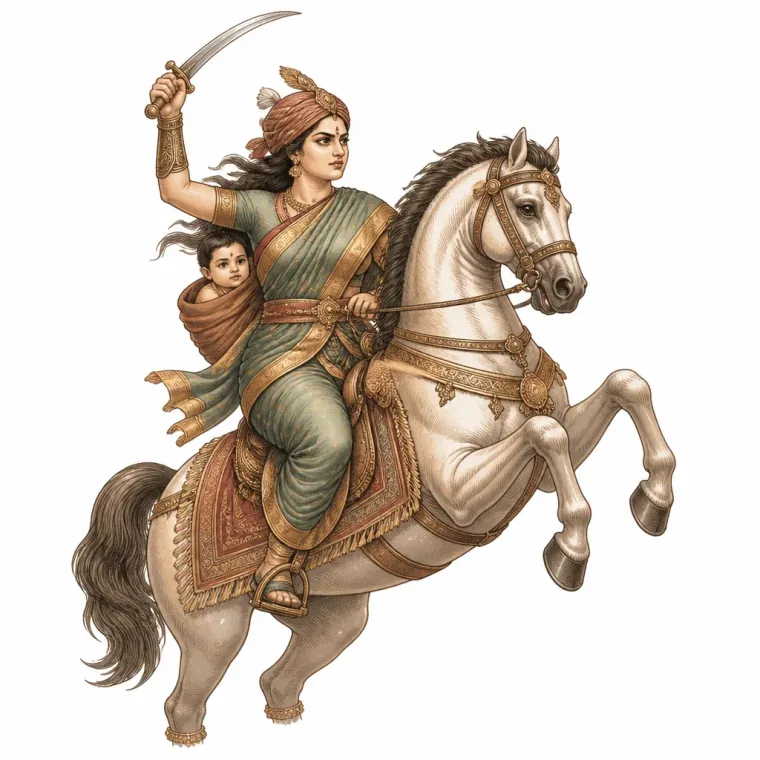
Most of us can name Rani Lakshmibai and Sarojini Naidu. The freedom struggle had many more brave women. Here are eight of them, from Karnataka to Assam, each with a source. Tell one story at dinner tonight.
1. Bhagat Singh's "wife" on the train was a revolutionary
After a British police officer was shot in Lahore in 1928, Bhagat Singh had to escape. His group asked Durga Devi Vohra to act as his wife. She carried her small son to make the story real.2
Bhagat Singh wore a suit and a felt hat. A friend played their servant, though accounts differ on who it was. They took a first-class train to Calcutta. Police questioned them, but they got through.2
People called her Durga Bhabhi. Her husband, Bhagwati Charan Vohra, died in 1930 while testing a bomb. Later she ran a school for poor children in Lucknow. She died in 1999, aged 92.2
2. A Karnataka queen fought the British 33 years before 1857
On 23 October 1824, the fighters of Rani Chennamma of Kittur shut the British out of their fort. The British official St John Thackeray was killed that day.1
A bigger British force came back. The fort surrendered on 4 December 1824. Chennamma was kept in Bailhongal Fort and died there on 21 February 1829. Her general, Sangolli Rayanna, kept fighting until he was caught and hanged in 1829.1
Why it matters today: the fight for freedom started long before the big revolt of 1857.
3. A Begum ruled Lucknow in 1857 and died far from home
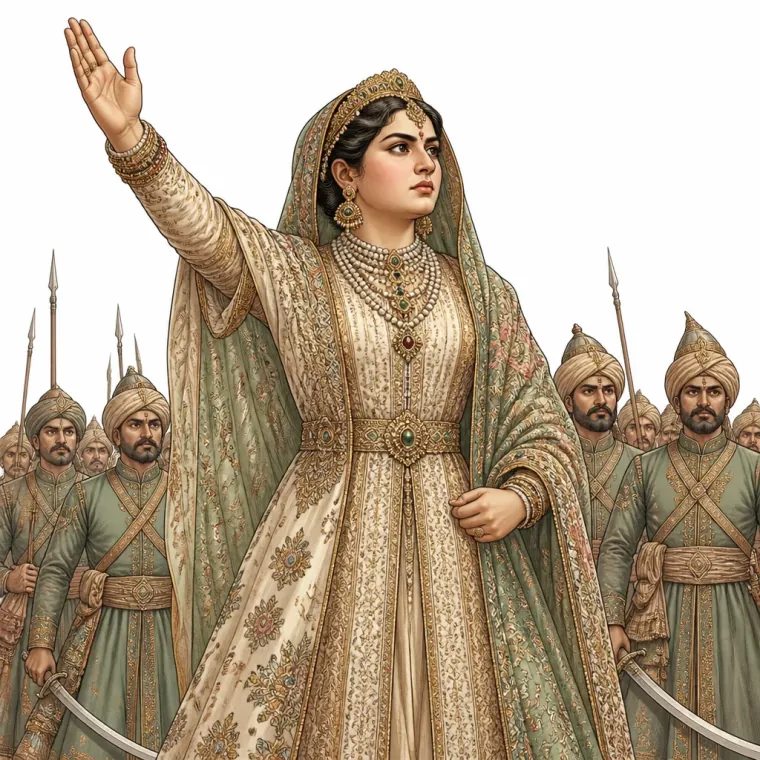
When the revolt of 1857 began, Begum Hazrat Mahal took charge in Lucknow for her young son, Birjis Qadr. She led the fight against the British in Awadh.3
When the British took Lucknow back, she went to Nepal. Nepal's ruler first refused her, then let her stay. She died in Kathmandu on 7 April 1879, aged 59, and lies in an unmarked grave. In 1962, a park in Hazratganj, Lucknow, was named after her.3
4. Folk tradition says Jhalkari Bai dressed as Rani Lakshmibai
The story told in Bundelkhand says Jhalkari Bai served in Rani Lakshmibai's women's army. She looked very much like the Rani. During the siege of Jhansi in 1858, she is said to have dressed as the queen and fought in her place.4
Historians note that she is missing from most records of that time. Her story comes mainly from songs and memories of the Kori community near Jhansi. In 2001, India Post issued a stamp in her honour.4
Why it matters today: many brave people live on only because ordinary families kept telling their stories.
5. Aruna Asaf Ali raised the flag when the leaders were in jail
On 8 August 1942, the Quit India resolution was passed. The next morning, the top leaders were arrested. Aruna Asaf Ali led the rest of the session and hoisted the Congress flag at Gowalia Tank Maidan in Bombay.5
She then went into hiding. The British offered a reward of 5,000 rupees for her capture. Gandhiji wrote to her by hand and asked her to surrender, so the reward could help the Harijan cause. She came out only in 1946, when the warrant was taken back.5
Later she became Delhi's first Mayor in 1958. She received the Bharat Ratna after her death, in 1997.5
6. Pritilata Waddedar led an attack at just 21
Pritilata Waddedar was born in 1911 in Chittagong. She finished her degree in philosophy with distinction from Bethune College in Kolkata. Then she joined the group of the revolutionary Surya Sen, known as Masterda.6
On 23 September 1932, she led an attack on the Pahartali European Club in Chittagong. She was trapped during the raid. She swallowed cyanide rather than be caught. She was 21.6
7. Sucheta Kripalani sang Vande Mataram on freedom night
On 14 August 1947, India's Constituent Assembly met for the Independence session. Just before Nehru's famous "Tryst with Destiny" speech, Sucheta Kripalani sang Vande Mataram.7
She had gone to jail during the Quit India Movement. In 1963 she became Chief Minister of Uttar Pradesh. She was the first woman to lead any Indian state.7
8. Kanaklata Barua was 17 when she fell holding the tricolour
Kanaklata Barua was born on 22 December 1924 in Assam. She joined the Mrityu Bahini, a group of young people from Gohpur ready to die for freedom.8
On 20 September 1942, she led a march to raise the national flag at the Gohpur police station. Police fired on the march. She was shot and died, aged 17. Mukunda Kakoti picked up the flag. He was shot too.8
In 1997, an Indian Coast Guard ship was named after her. Why it matters today: the flag we wave so easily was carried by children who did not come home.8
🙋 Questions families ask
Who helped Bhagat Singh escape from Lahore?
Durga Devi Vohra, called Durga Bhabhi, acted as his wife on the train in 1928.
Who was the first woman Chief Minister in India?
Sucheta Kripalani, Chief Minister of Uttar Pradesh from 1963.
Is the story of Jhalkari Bai true?
It comes mostly from folk tradition. Historians find little about her in records of that time.
Keep our roots alive at home
Ananda Family helps you explore Hindu stories, festivals and samskaras, with a daily mantra and an evening story practice for your family.